Posts

Showing posts with the label nerd alert

Here’s 3,000 Years of Spanish History in 3,000 Words

Image
You’ll be shocked at how much history is all around you the first time you visit Spain. Major roads follow the same routes the Romans first trailblazed; your hotel might operate out of a renovated luxury apartment block from the 1800s; and soaring cathedrals still stand today based on 800-year-old technology. It can be overwhelming if, like me, you grew up in suburban America, where the oldest building dated back to the 1950s and Native American heritage was either scant or ignored. Coming to terms with the sweep of your country’s history is a lot easier when it’s only been around for a few centuries…versus a few millennia. True to my history major roots, I’ve extensively studied the history of Spain, reading several books and visiting as many cathedrals, castles, and museums as I could in the three years I lived in Spain. In this post, I’ve distilled 3,000 years of history down to around 3,000 words, saving you from having to read a 500-page textbook before you travel or move to...

Chasing Charlemagne in Aachen, Germany

Image
As a history major, I’m not one to subscribe to the Great Man theory of history. The way I see it, inventions, movements, religions, diseases, trade, and geography play a much more crucial role in human events than mere single characters do. And besides, there have been many Great Women! Nevertheless, some people are more influential than others: think Muhammad, Christopher Columbus, or whoever invented air conditioning. Aachener Dom When it comes to European history specifically, Charlemagne stands as one of the most significant actors in shaping what we know today as Europe. Following the countless barbarian invasions that had left the western Roman Empire in disarray, Charlemagne (who was himself a “barbarian” Frank) brought the West back together under a single rule, promoted learning amid the ignorance of the Dark Ages, and conquered so much land that he became the father of both France and Germany. During my weekend jaunt to western Germany last year, I made a daytrip...

A Crash Course in the Galician Language

Image
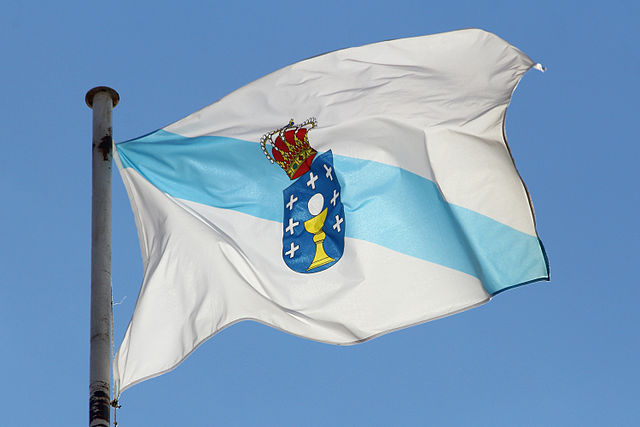
Galicia, located in Spain’s northwestern corner, is  one of the country’s greatest regions. When I lived there from 2013 to 2015, I couldn’t get enough of the glorious, fresh food , the green, lush countryside, and the grand, granite architecture . But I could only take canned sardines with me back home, we’ve got enough humidity here in Texas, and sadly the oldest buildings in suburban Plano date back not to the 1070s but the 1970s. View this post on Instagram Okay, but really, y'all, where are the fairies??? This place has got some serious magic about it... // #flowers #spring #park #santiago #santiagodecompostela #galicia #spain #vsco #vscocam A post shared by Trevor Huxham (@trevorhuxham) on Mar 13, 2014 at 1:29pm PDT But what has stuck with me the most has been galego , the Galician language that I quickly picked up on after being immersed in it from day one at the elementary school I worked at. Clo...

Time-Traveling to the Dark Ages in Oviedo, Spain

Image
Church of Santa María del Naranco Out of all the places we had on the hitlist for our Roommate Road Trip across Spain’s northern coast, I was most looking forward to Oviedo, the capital of Asturias. This city’s pleasant old town, nestled between green mountains and full of restaurants that serve hearty traditional dishes like fabada bean stew , reminded me a lot of Santiago de Compostela’s . Oviedo kept showing up on my travel radar because of its impressive collection of monuments that date back to the 800s CE—yes, you read that correctly; not 1800 but 800 . My inner history geek couldn’t wait to check out three well-preserved pre-Romanesque churches,  built in a style that blossomed in this part of Spain during the otherwise gloomy Dark Ages. What does it mean to be “pre-Romanesque”? Carved capital on an engaged column Also know as Asturian art,  this architectural style was born in the earliest days of Spanish history, when the tiny Kingdom of Asturia...

Finding Harry Potter in Porto, Portugal

Image
Confession: I never read the Harry Potter series growing up —even though I came of age as J. K. Rowling was publishing one book after another. My parents didn’t let me read the books in elementary school (yet The Lion, the Witch, and the Wardrobe  was fine?), and as I grew older, my inner hipster mindset wouldn’t let me deign to read mass-produced fiction. I soon came to my senses and ultimately read the entire series during my first school year working as a language assistant in Spain, and I even signed up for Pottermore.com and got placed in Ravenclaw house. Porto’s old quarter seen from the Miradouro da Vitória Now that I’m a fan of the Harry Potter books and movies, I was convinced to visit Portugal’s second-biggest city, Porto, over Easter break not only because everyone I talked to raved about the city but also because of its intimate connection with Rowling herself. Pronounced “POR-too” [ˈpoɾ.tu] (not “poor toe”!), this city was home to the author between 1991 ...

20 More Fun Facts About the Galician Language

Image
Read my Galician crash course here to get up to speed in the language. Last year, I wrote  “22 Fun Facts About the Galician Language,”  distilling what I’d observed of Galician after a few months of contact with the language. Half a year later, I’m still learning  galego  (mainly from my preschool English students who exclusively talk to me in the language!) and picking up on the language’s subtleties. Here are 20  more  fun facts I’ve collected over the past several months: One of the most distinctive features of the coastal Galician accent spoken where I work is the gheada  phenomenon, where the G sound ends up being a throaty KH or H sound. For example, whenever my preschool students finish with a worksheet, a lot of them will ask me, “ qué fago? ” which means, “What do I do [next]?” but they pronounce it more like “kay FAH-khoe” [ke ˈfa.ħo]. Galician comic artist Luis Davila often depicts characters speaking with a gheada  accent, using t...

My #NerdAlert Pilgrimage to the Roman Ruins of Pompeii, Italy

Image
I’m a big supporter of Doing What You Want when traveling: of seeing and doing things that you like rather than feeling obligated to mark things off your guidebook’s Top 10 Must-See list. You end up enjoying your travels the most when you focus on the things that interest you —even if that means skipping an “unmissable” sight somewhere else. Roman road I say all this to say… I went to the ruined Roman city of Pompeii in December because I am the biggest nerd ever. Pompeii may not be an obscure or unique place to visit when compared with others that Italy has to offer, but when I made my “Grand Tour” of Italy over Christmas Break, I passed over Venice (which is typically considered an essential stop, and which I had zero  desire to visit) in favor of Pompeii, a place I’ve dreamed for years of seeing one day in person. Studying Latin and learning about Pompeii Wave mosaics I’ve had this urge to go on a pilgrimage to this well-preserved Roman town ever since middle ...

My 10 Favorite Churches in Rome

Image
When I was back home in Texas last summer, I decided to educate myself on all the architectural styles that have left their mark across the centuries in western Europe. I had a vague idea of what Romanesque , Gothic , or Classical Revival  buildings looked like, but I would have been stumped had you asked me to explain what exactly made each time period stand out from the others. So I embarked on  History of Architecture I ,  a free iTunes U course taught by Ohio State University professor Jacqueline Gargus. Although I have no background in architecture, engineering, or design, I found it super easy to jump right to Prof. Gargus’s lively discussion of western architecture. Ceiling of the Church of Santa Maria Maggiore Watching these lectures really helped me to grow in my knowledge of the major styles, and I now feel comfortable explaining the differences and revolutionary ideas of each era. I also enjoyed being introduced to some of the most significant exam...

They Speak More Than Just Spanish in Spain

Image
Did you know that they speak more than just Spanish in Spain? Did you know that there isn’t just one Spanish language, but perhaps eight Spanish languages? Until I started studying Spanish in college and came here for work, I had no idea myself. Spain is actually home to quite a few minority languages that make the country a more interesting place. It makes a lot more sense that the birthplace of español  could also be home to half a dozen other languages when you realize that Castilian Spanish began its life as the everyday Latin spoken around modern-day Burgos province in north-central Spain. During the Reconquista —a 700-year military struggle by the fledgling Christian kingdoms to the north to “re-”conquer the Muslim-ruled (and Arabic-speaking) lands to the south—Castilian emerged alongside Galician, Astur-Leonese, Aragonese, and Catalan, and as the conquerors pushed south into the Moorish states, they brought their respective languages with them. (Source: Wikipe...

22 Fun Facts About the Galician Language

Image
Read my Galician crash course here to get up to speed in the language. Galician  is a Romance language (i.e., from Latin) spoken by about 3 million people in Spain’s northwestern region of Galicia. Although it’s most closely related to Portuguese—which is spoken south of the border—it shares many similarities with Castilian Spanish, including sounds and spelling. A Coruña If you’re planning on spending any time traveling or living in this unique corner of Spain, or walking the Camino de Santiago pilgrimage route that ends here, even a tiny knowledge of Galician will help you get around and navigate menus, maps, etc. If you happen to speak Spanish, you’re already 80% of the way to understanding Galician, and I’m serious! Getting a grasp on the grammatical and phonological differences will turbo boost you up to 90%. To whet your appetite (both literally and linguistically), here’s a little selection from the Galician Wikipedia’s article on empanada , or meat pie: Unh...